
 Report Problem
 Translate
Regional Leaders Unite to Strengthen Community Response and Preparedness
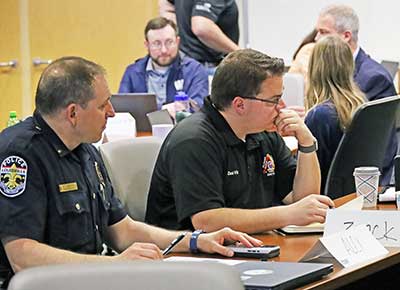 The mayor of Mt. Washington, the assistant chief of the Louisville Metro Police Department, the Senior Safety Engineer at Ford Motor Co., Louisville Water’s Director of Safety, Security & Risk—these are just a few of the 40 regional leaders who recently gathered at our Third Street headquarters for a comprehensive crisis leadership course.
It provided a critical touchpoint for professionals across multiple sectors to train together, laying the foundation for stronger relationships and enhanced response during future emergencies.
We’re All in It Together
“Building relationships in sunny-day environments is critical to community response,” said Meghan Brown, Louisville Water Emergency Preparations & Resiliency Coordinator. “Understanding each response entity’s capabilities and knowing who to call helps us rebound faster after an emergency event.”
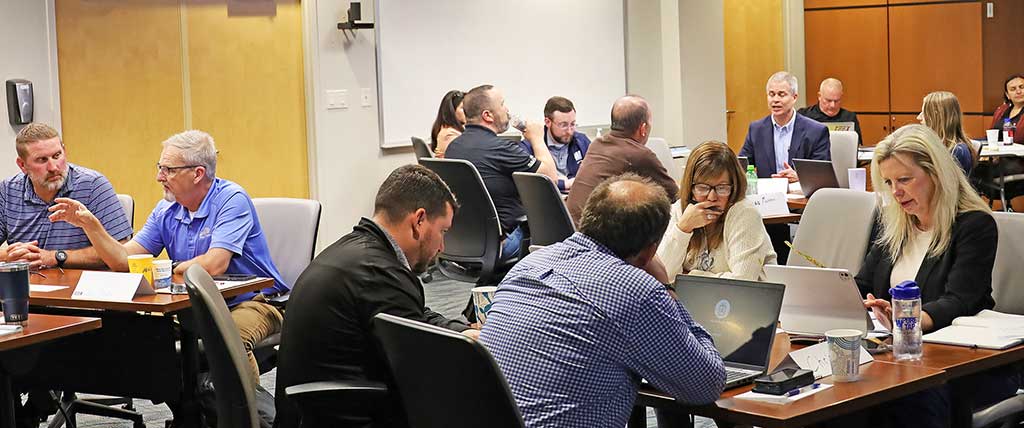
Texas A&M University’s Engineering Extension Services oversaw the session. Brown pointed out that “securing specific courses can take six months to a year of lead time in planning. Instructors with real life emergency management experience are identified and fly to the host city. It’s an incredible value savings to bring two trainers to our staff and host on site.”
Course attendees also include fire officials, retired military personnel, corporate risk managers, operations staff, health and safety professionals, and communications leaders.
“We learned: We’re in it together,” Brown explained, noting how participants shared their experiences and challenges. They highlighted the importance of early planning, consistent training, and concise, honest communication during a crisis.
Louisville Water Corporate Risk Coordinator Sonja Minch said she found the session’s recap of previous incidents and related decisions “helpful for planning for future events,” and she “learned that the number of agencies involved, along with volunteer efforts, must be strategically managed to ensure that critical needs are effectively met.”
Learning Lessons from Previous Events
The course focused on a scenario that drew lessons from the devastating impact Hurricane Harvey had on the Gulf Coast in 2017. Louisville’s geography, aging flood protection infrastructure, and frequent flooding make this type of training highly relevant.
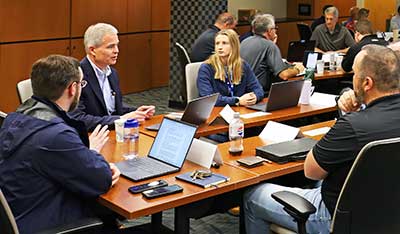 “Our city is no stranger to severe weather events,” Brown said. “Kentucky has experienced the most federally declared disasters of any non-coastal state, with a total of 23 federally declared major disasters from 2011 to 2024. Our threat landscape continues to evolve with Tornado Alley shifting east into western Kentucky. Aside from environmental threats, we face technical threats (cybersecurity) and manmade threats as well. Disasters will keep coming. Preparedness is a culture we can adopt to build resilience over time. That’s the extinguisher to the fire: Human resilience is what will help us rebound best.”
As many of the course attendees share their training with their home organizations, the security and risk management teams at Louisville Water will continue to identify vulnerabilities, close planning gaps, and work to create a culture of employee preparedness throughout the organization, strengthening not just local readiness but also our role in the resilience of the entire region.
“Collaboration is always beneficial,” Minch said, “as it brings forward questions and solutions that might otherwise be overlooked. The more prepared we are for an incident, the better it is for our employees and the city as a whole. Planning is essential.”